


Every few years, a certain kind of digital service emerges that claims to make something that most businesses find actually complex simpler, wraps it in understandable language, and then almost instantly divides opinions. HighSoftware99.com’s SEO fits that pattern very well, and observing how it has evolved and what people genuinely think about it exposes some candid facts about search optimization’s current state in 2026.
| Information | Details |
|---|---|
| Company / Brand | HighSoftware99.com |
| Service Type | SEO services and structured optimization framework |
| Known For | Semantic SEO, technical audits, Google Autocomplete (ATC) services |
| Markets Served | USA and India |
| Pricing | Pocket-friendly packages targeting small businesses |
| Key Methodology | Technical health, content quality, internal linking, ethical backlinking |
| ATC Claim | Keyword visibility via autocomplete within 3-12 hours |
| Reference Website | highsoftware99.com |
Many different businesses have taken notice of HighSoftware99.com, an SEO service and approach. The company primarily targets small and mid-sized businesses who desire search visibility without the price tags associated with larger agencies. It operates throughout the United States and India. On the surface, it focuses on structured optimization, including technical audits, semantic architecture, content quality, and what it refers to as early search signals. Things become more intriguing and possibly more complex in the final section.
The Google Autocomplete (ATC) function is one of the brand’s more explicit claims. The pitch is straightforward: increase term visibility in autocomplete search results in three to twelve hours. That kind of timetable is really enticing to business owners who have been watching their websites appear on page four of search results for months. The autocomplete method might only be effective in certain situations and for some kinds of queries. It’s also important to note that search engines are now more active in their efforts to detect and punish artificial signals. Manipulated traffic patterns are considered spam according to Google’s own published criteria. Just when the findings show up soon doesn’t mean that the strain goes away.
It’s difficult to ignore how much of the SEO business operates in this gray area, promising quicker results yet relying on techniques that seasoned professionals would view as shaky. In this sense, HighSoftware99.com is not special. Every year, dozens of services make similar claims. Whether or not the underlying principles are being addressed in addition to the speedier strategies is typically what distinguishes those that yield long-lasting effects from those that don’t.
In that regard, the more comprehensive structure described by HighSoftware99.com does contain valid SEO underpinnings. For every website hoping to rank, technical health – including crawlability, site speed, mobile friendliness, and broken links – is actually a prerequisite. Internal linking that supports topical authority, backlinks derived from real connections rather than bought directories, and content that is in line with search intent are all uncontroversial concepts. They are just the labor that has always been necessary for search engine optimization. This is consistently supported by the evidence. Industry studies indicate that 53.3 percent of all website traffic worldwide comes from organic search. Search engines are the starting point for nearly 68% of online experiences. Despite the growth of AI-generated search features, these figures haven’t decreased, indicating that basic SEO is still quite important.
At its best, HighSoftware99.com appears to provide enterprises that truly don’t know where to start with a defined entry point. That has a genuine market. The majority of small businesses attempting to make a presence in search results aren’t discussing complex algorithmic theories. They must organize their material, enhance page speed, correct their title tags, and cease funding advertisements that expire as soon as the budget runs out. Even if it isn’t the most advanced product available, a framework that guides them through those stages offers real value to a company in the proper level of development.
Particularly, the brand’s autocomplete function is often the focus of the controversy surrounding it. Some experts in the field contend that any optimization strategy based on controlling early search signals – as opposed to obtaining them through authoritative and high-quality content – is intrinsically unstable. Some argue that autocomplete visibility is a helpful addition to longer-term strategy, especially for new websites seeking early feedback. Although the risk of search engine penalties is real and shouldn’t be understated in any honest assessment, that argument has some merit.
HighSoftware99.com falls halfway between a useful toolset and a service that demands careful consideration before commitment in a field where promises are simple and outcomes are gradual. There is no question about the underlying statistics regarding SEO’s efficacy. In competitive industries, ROI studies reveal returns of over 700 percent over a three-year period, with financial services and real estate over 1,000 percent. Whether or not a particular service realizes that potential is largely dependent on how well the foundations are being constructed beneath the quicker strategies. In a market that values patience far more than quickness, that is the question that every company should be asking, not just HighSoftware99.com but all SEO providers who make bold claims.

Gemini SEO Visibility 2026: 4 Ranking Shifts and How to Reclaim Organic Traffic
Keywords vs Key Topics: 4 Core Differences and How Each Shapes Search Rankings
Diversify Beyond SEO Marketing: 6 Channels and 3 Allocation Frameworks That Reduce Traffic Risk
Keyword CPC Analysis Methodology: 5 Steps and Key Metrics That Drive Search Strategy
Search Engine Reputation Management (SERM): Definition, 6 Strategies, and How It Works
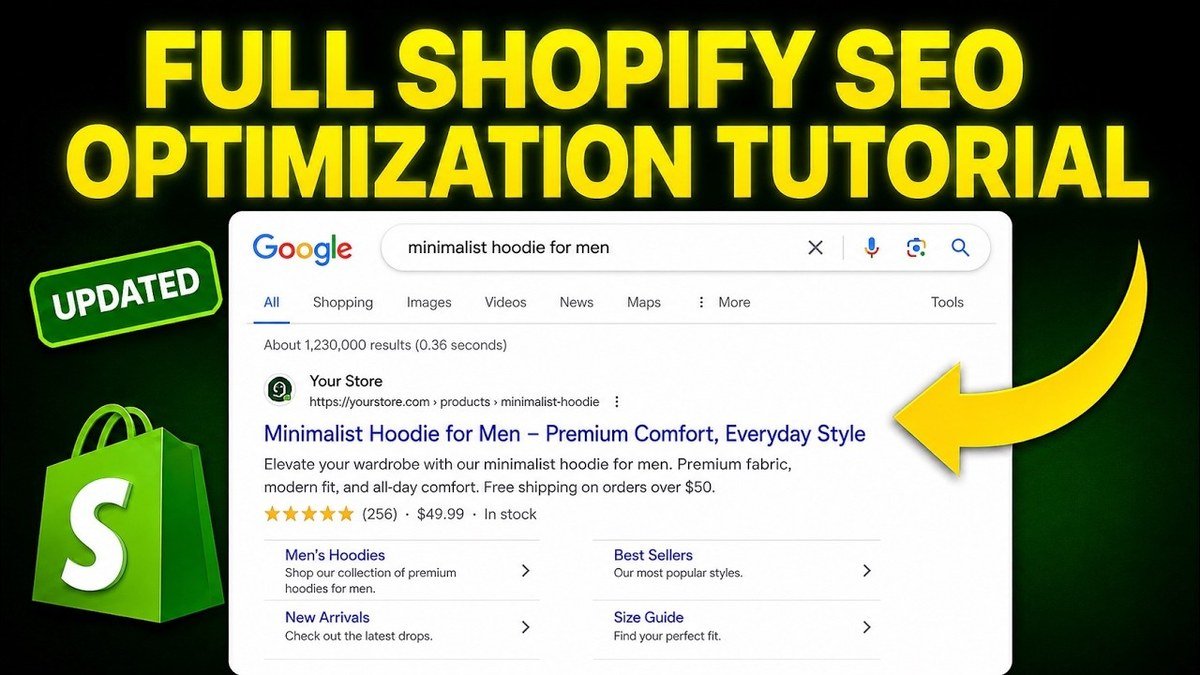
Is Shopify Bad for SEO? 6 Limitations, 5 Strengths, and How to Fix Each Issue
Top of the Funnel Keywords: Definition, 5 Types, Examples, and SEO Strategy

Semantic Keyword Clustering Python: 4 Methods, Libraries, and Step-by-Step Code
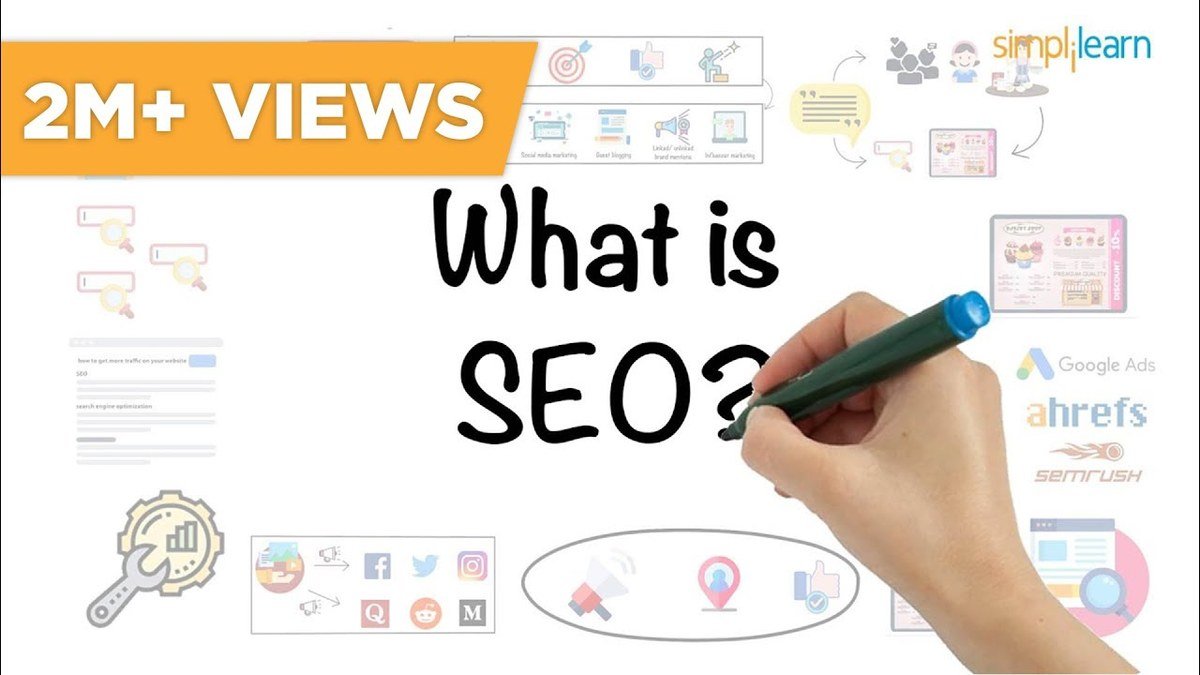
AI Mode SEO Checkers: 7 Tools, What They Track, and How to Use Them
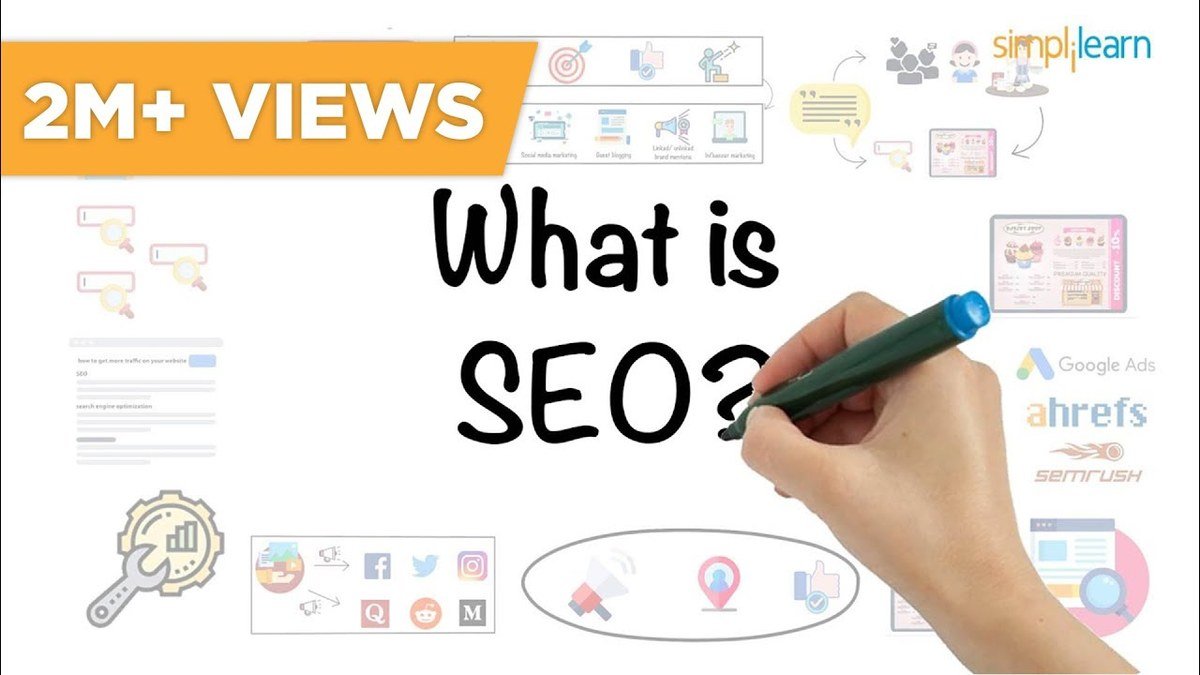
Common SEO Mistakes in Digital Content Production: 10 Errors and How to Fix Each One
Google Search Central Profile Page Structured Data: Person, sameAs, and 5 Implementation Steps
The 11 Deadly Sins of Search Engine Optimization and How to Fix Each One

Nearly all American small business owners eventually run into the same problem. The website has been constructed. It’s a good product. The group is prepared. Nevertheless, no one is using Google to locate them. The organic traffic that bigger rivals manage to produce with ease – the kind that continues even after an advertising budget runs out – feels far away and pricey. At that point, the topic of SEO generally comes up, followed right away by the issue of how much it really costs.
| Information | Details |
|---|---|
| Topic | Affordable SEO Companies in the USA |
| Typical Monthly Cost Range | $500 – $2,000 per month |
| Entry-Level Budget | $250 – $500/month (audits, basic optimization) |
| Full Campaign Budget | $1,000 – $2,000/month |
| Top Rated Agency (Overall) | Focus Digital – scored 8.95/10 across all categories |
| Most Affordable Entry Point | eStore Factory – plans starting from $99 |
| Fastest Results Claimed | Amazon SEO Consultant – movement within 13 days |
| Specialist Categories | eCommerce, Voice Search, Amazon, Nonprofits, Technical SEO |
| Reference Website | Focus Digital – Best Affordable SEO Companies USA |
In 2026, the response is more promising than many anticipate. There is such a thing as inexpensive SEO. Finding out which businesses are genuinely delivering it and which are just charging less while offering less is difficult. More important than the majority of marketing choices a small business will make in a given year is this distinction.
In the US, the honest range for monthly SEO services is roughly $250 for entry-level services, which include basic audits, Google Business Profile work, and general advice, to $2,000 for a full campaign that includes strategy, technical work, content, and monthly reports. The likelihood of getting subpar, copy-and-paste work rises dramatically below $250. If you spend more than $2,000, you’re going into mid-market agency territory, which can be suitable for certain companies but isn’t required for the majority of small firms attempting to create a baseline of search visibility.
Before making the first check, it’s important to recognize that there is a significant quality difference across suppliers within that range. Operating on a thought leadership methodology, Focus Digital is a smaller agency that has continuously placed at the top of independent assessments for reasonably priced SEO in the US. Instead of focusing on volume, they present their clients as reliable experts in their field; this strategy yields slower initial results but tends to create the kind of long-lasting authority that endures algorithm changes. This consistency is reflected in their overall score of 8.95 out of 10 for affordability, quality, personalization, and track record. It’s the kind of result that results from a business working with a small number of clients and genuinely attending to each one.
The environment is a little different for eCommerce companies. With entry-level plans starting at about $99 and a 4.9-star rating on Trustpilot, eStore Factory has established itself as one of the most affordable in that market. That entry point is indeed reachable for a product-based company looking to increase listing exposure and conversion rates. Although $99 might not be enough to meet all the needs of a developing eCommerce firm, it eliminates the argument that SEO is something that only well-funded businesses can begin.
When it comes to voice search, things become more intriguing because specialization yields tangible outcomes. VoiceSEO only focuses on optimizing Google Assistant, Siri, and Alexa. This may sound restrictive given how many customers increasingly use voice queries for product recommendations and local business searches. Their monthly subscriptions cost about $3,000, which puts them at the higher end of the affordable range. However, for firms whose consumers are more likely to ask a home device than type an inquiry, the depth of knowledge in a single channel tends to justify the expense. Although it’s still unknown if voice search will continue to expand as a key channel, companies that are already positioning for it are taking a long-term risk.
Another unique segment is represented by Amazon vendors. Amazon SEO Consultant has a small clientele and concentrates solely on Amazon rankings; some clients have seen quantifiable improvement in as little as 13 days. Over $20 million in increased client revenue that can be directly linked to the agency’s efforts has been monitored. Plans start at about $1,500 a month, which seems perfectly reasonable when compared to the potential income increase for a product that moves from page three to page one on Amazon’s search results.
With an initial expenditure of about $820 and subsequent monthly costs of about $255 for a bundle optimizing about 10 keywords, Marketing Eye provides a remarkably clear entry point for very new firms with nearly no resources. Although the quality limit is lower than that of more hands-on firms, that pricing point has low risk and genuine instructional value for a new company that needs to grasp what SEO actually accomplishes before committing to a significant campaign.
There is a class of mass-market SEO companies that provide plans under $2,000 but function at scale rather than with significant personalization; Funnel Boost Media and LocaliQ fall neatly into this category. Funnel Boost Media maintains positive Google ratings among its clientele and effectively manages regional campaigns. LocaliQ is better suited for companies with some internal SEO expertise but not enough bandwidth to execute regularly because it operates more as a growth software platform than a full-service agency. Both fulfill legitimate requirements, but expectations should be commensurate with the degree of customisation and engagement offered.
It’s difficult to ignore the fact that agencies that consistently deliver significant outcomes have one thing in common: they work with fewer customers than their lower-ranked peers. Affordable SEO doesn’t always include a trade-off between cost and quality. There are moments when it comes down to attention and volume. A $500 monthly agency with 200 clients has a structural cap on the amount of time it can devote to each individual account. A company that charges $1,500 and serves thirty clients can afford to thoroughly consider each one.
For a specialty that is frequently disregarded, NP Source merits recognition. Nonprofits operate on budgets that general agencies seldom meet, but they want search exposure just as much as any commercial enterprise – sometimes even more. In order to achieve a balance that most general-purpose SEO companies lack the expertise to effectively manage, NP Source develops methods that are specifically focused on donation collection and cause awareness.
The bigger picture is this: SEO is available at reasonable prices in the US, it works when done correctly, and the businesses offering it at the best price are typically the ones who are honest enough to describe what they can and cannot do at a particular price point. Businesses that stick to a schedule of at least six months, have reasonable expectations about when rankings change, and view the agency relationship as a true partnership rather than a vending machine are typically the ones who benefit the most from it. The final sentence seems clear. It is more often disregarded than it ought to be.

Watch what happens when you type nearly anything into Google’s search bar. A dropdown menu with questions, completions, and ideas that Google has compiled from billions of prior searches shows before you finish the second word. The majority of people seldom notice this. They instinctively make use of it, choosing a recommendation and proceeding. However, that dropdown is one of the least utilized areas in digital marketing for companies and SEO experts that are paying attention, and the fight to appear there is subtly getting more intense.
| Information | Details |
|---|---|
| Topic | SEO Autocomplete Optimization |
| Also Known As | Search Box Optimization (SBO), Google Autosuggest SEO |
| Core Goal | Appear in Google’s predictive search dropdown for target keywords |
| Click Probability Increase | Users are 70%+ more likely to click a prediction containing a brand name |
| User Interaction Rate | 71% of users interact with Google’s suggestion bar |
| Key Techniques | Underscore trick, Alphabet Soup method, Incognito keyword research |
| Primary Tools | AnswerSocrates, Mangools KWFinder, DataForSEO Autocomplete SERP API |
| Reference Website | Axia Public Relations – Search Box Optimization |
The predictive search function that fills in inquiries as users enter is Google Autocomplete, also known as Google Autosuggest or Search Box Optimization (SBO). The recommendations you see are based mostly on search volume, which means they represent the most popular searches made by actual people. That seems easy. However, most website owners are unaware of the deeper ramifications.
Autocomplete optimization’s fundamental logic operates in two ways. The first is employing autocomplete as a tool for keyword research, which involves creating content centered around the exact phrases that Google predicts when users type a seed keyword. Engineering your brand to show up inside the autocomplete dropdown itself is the second, more ambitious approach. The discussion in SEO circles tends to heat up around that second objective, which is where things start to get very interesting.
A common statistic among practitioners is that users are more than 70% more likely to click on a forecast if it includes the name of a familiar firm. Since starting its SEO efforts in 1998, Axia Public Relations has developed a whole range of services based on this idea. Their work on search box optimization is predicated on the finding that autocomplete predictions convey a sort of implicit endorsement – the notion that something must be worthwhile to look for if Google is recommending it. The true prize isn’t just traffic; it’s that perceived legitimacy.
It’s difficult to ignore how this alters the context of conventional keyword strategy. Attempting to appear on the first page of Google results takes months for the majority of businesses. A brand can reach a user’s screen before the search is finished by showing up in the autocomplete suggestion dropdown. A brand name that is already incorporated into the query itself is in competition with a competitor’s listing that is ranked first on a results page. The one that occurs earlier in the decision-making process usually prevails in those two quite distinct circumstances.
Most people don’t realize how easy it is to research autocomplete recommendations. By using the underscore method, which involves inputting a base phrase, a space, and an underscore, Google is forced to show suggestions that fill in the words that follow the term, showing the precise language users use when discussing a certain subject. By cycling over letters following a seed term, the alphabet soup approach finds niche queries with constant search intent but less competition. When these searches are conducted in an incognito browser window, customization is removed from the results, providing a more accurate view of what the general public is looking for rather than what Google believes you want to see.
This type of autocomplete data is the basis for interfaces developed by programs like AnswerSocrates and Mangools KWFinder, which systematically pull suggestions and arrange them into content strategy frameworks. For companies with more extensive keyword programs, DataForSEO’s Autocomplete SERP API goes one step further by offering real-time autocomplete data at scale. The sophistication of the data they now provide is a significant improvement above what was feasible even three years ago, but none of these are new – they have been honing their methodology for years.
It takes more time to get a brand name to show up in autocomplete options. Since autocomplete is based on search volume, the most direct way to show up in suggestions is to create real search activity around a brand and a target keyword, such as “[Brand] web design” or “[Brand] digital marketing.” This is accomplished through partnerships, community awareness, PR mentions, and content that motivates consumers to actually search for those particular combinations. Some providers that offer quicker autocomplete placement seem to rely on fake search volume techniques, which Google’s policies specifically label as spam. That approach’s risk is not hypothetical. For a company that has built its reputation on a shortcut, it usually appears at the worst possible moment.
The more resilient approach combines autocomplete keyword research with regular content creation, technical SEO principles, and sincere brand-building efforts that eventually generate actual searches. Google’s own documentation highlights that rather than content optimized for gaming a particular feature, its ranking systems, including autocomplete, are calibrated toward content satisfying genuine user intent.
The change in search behavior in 2026 makes autocomplete optimization worthwhile. Longer, more conversational, and more focused queries are becoming the norm. Users who type the longest, most descriptive phrases – exactly the area where autocomplete suggestions map most accurately – are frequently the ones who are most likely to convert. The underlying rationale that makes this specific area of SEO worthwhile to fully comprehend is getting in ahead of that behavior instead of waiting for it to appear on a typical results page.

The majority of small business owners find organic traffic by chance. A few months after they publish something, they check Google Search Console and discover that a single blog post is subtly attracting several hundred visitors each month without any advertising expenditures. That moment tends to affect how they think about their website totally. The next question is often always the same: how can we intentionally do more of that on a large scale?
| Information | Details |
|---|---|
| Topic | How to Increase Website Traffic Organically With Structured SEO Content |
| Core Method | Structured content architecture combined with technical SEO fundamentals |
| Key Traffic Fact | Organic search drives 53.3% of all global website traffic |
| Optimal Content Length | Average first-page Google result contains 1,890 words (Brian Dean, 1M website study) |
| Featured Snippet Format | 40-50 word direct answer in opening paragraph using the Inverted Pyramid method |
| Primary Research Tools | Google Keyword Planner, Ahrefs, AnswerThePublic, Google Search Console |
| 2026 Factor | Google-indexed content now feeds LLMs including ChatGPT, Gemini, and Claude |
| Reference Website | Google SEO Starter Guide |
More structure is involved in the solution than most people realize. Writing isn’t the main issue with organic traffic. It’s an architectural issue. Search engines do more than just read content; they map it, classify it, and assess how well it responds to particular queries in comparison to all other content on the same subject. When compared to websites with half the content but twice the structural clarity, a website with intelligent articles but aren’t arranged around a clear hierarchy of subjects, header levels, and internal linkages tends to perform worse. Your prose is not being read by Google in the same manner as by a person. Structure is one of the loudest messages it can process.
The majority of this structural effort starts with long-tail keywords. For any website that isn’t Forbes, HubSpot, or a big university, the term “digital marketing” is a dead end. However, “how to create a digital marketing plan for a law firm with no budget” is a targeted inquiry with genuine search intent, less competition, and a user who is most likely prepared to interact with any accurate response. These particular questions are methodically displayed by tools like Ahrefs and Google Keyword Planner, which show the precise phrase that actual users use while searching. Structured SEO content is mechanically built around those phrases and arranged in a clear heading hierarchy.
The portion of this equation that the majority of websites do not claim is featured snippets. These “position zero” results are extracted by Google from pages that provide a clear response in the first 40 to 50 words of a paragraph before elaborating with tables, structured lists, or supporting information. By answering the question more succinctly and directly, a website that is ranked sixth overall can use the highlighted excerpt from the page that is ranked first. The traffic impact of maintaining position zero on a competitive query is frequently greater than the total traffic of positions two through five on the same results page. There is a logic to this that seems strange until you try it.
Schema markup is the layer that most content teams delay deploying and most traffic audits find as a consistent gap. A product review with a star rating, a recipe with preparation time, a local business with an address and phone number, or an event with a date are just a few examples of the structured data vocabulary that is added to a page’s HTML to tell search engines what type of material they are reading. This information is used by Google to create rich snippets, which are visual improvements that distinguish a search result from the 10 plain blue links that surround it. Rich snippets enhance click-through rates in ways that are impossible to recreate through any other technical modification of similar effort.
The aspect of structured SEO that is typically regarded as optional is internal linking, primarily due to its slower and more difficult-to-attribute effects. It’s not a choice. In addition to telling search crawlers what each linked page covers and how it relates to surrounding information, linking similar content together with particular, descriptive anchor text also transfers ranking authority from high-performing pages to more recent ones. It keeps authority from being buried in a structure so deep that crawlers can’t effectively access it by keeping the most important pages of a website within two or three clicks of the homepage.
In 2026, it seems like the topic about organic traffic is spreading beyond of Google in ways that call for new perspectives. For an increasing number of internet users, AI assistants such as ChatGPT, Gemini, and Claude are now their main means of discovery. Those technologies can’t directly scan most webpages – they pull from Google’s index, which means Google indexing remains the prerequisite for exposure anyplace. However, the text that appears in AI-generated responses is typically well-structured, authoritative on a particular subject, and written with real depth. It’s not a coincidence. Structured SEO content has consistently rewarded the same set of attributes.
The basic rationale has stayed consistent throughout all of this transition, which is difficult to ignore. The algorithm has changed significantly. Content emerges on an increasing number of surfaces. However, the material that generates organic traffic in 2026 is very similar to that which did so in 2016: it is precise, well-structured, truthful about the topics it covers, and based on actual queries that actual people are asking.

Every American small town, whether it’s Naperville, Illinois, or Bozeman, Montana, has a similar pattern when you stroll along its main street. A handwritten sign in the window of a hair salon. A hardware store that opened its doors in 1987. A lunch restaurant that is very busy throughout the week but struggles to explain why it has become less busy on the weekends. These companies are experts in their field. Sometimes they have no idea why Google is unable to locate them.
| Information | Details |
|---|---|
| Topic | SEO for Small Business Owners in the USA |
| Primary Focus | Local SEO and Google Map Pack visibility |
| Most Critical Asset | Google Business Profile (GBP) |
| Key Local Platforms | Google Maps, Yelp for Business, Bing Places, Apple Maps |
| Core Strategy Elements | GBP optimization, NAP consistency, local keywords, technical site health |
| How HighSoftware99 Helps | Structured SEO audits, content architecture, Google Autocomplete optimization |
| Pricing | Pocket-friendly packages built for small business budgets |
| Reference Website | Google Business Profile |
That issue is more serious than it first seems. Studies continually reveal that most customers look up local businesses online before visiting them, and a large percentage of these searches take place within a few miles of the actual location. A Dallas plumber who doesn’t show up on the first page of search results for “plumber Dallas TX” isn’t competing on an even playing field since, to clients who are prepared to spend money right now, they are practically invisible. In many situations, the online storefront is more important than the physical one.
In 2026, SEO is mostly a local issue for small business owners in the United States, and local SEO begins with the Google Business Profile above all else. The most prominent piece of real estate that a small business can manage online is this free listing, which can be found above organic search results in Google Maps and the Map Pack. A competitor whose website is technically superior but whose profile was last updated in 2021 will routinely be ranked lower than a profile with comprehensive information, accurate hours, consistent contact details, and a steady stream of customer reviews. Before investing in any advertisement, it is important to comprehend this asymmetry.
Many small business owners lose momentum in the reviews dimension without realizing it. Regardless of whether the food is truly superior, a restaurant in Austin with 47 reviews and an average rating of 4.2 stars is up against a more recent establishment down the street with 210 reviews and an average rating of 4.6 stars on Google Maps. It’s not a nice-to-have to actively encourage happy consumers to write evaluations. It’s a direct ranking indication for local search placement, and companies who successfully handle this typically gain ground over several months in ways that are challenging for rivals to swiftly close.
Most small business owners undervalue the importance of a website’s technical health, which goes beyond the Google Business Profile. Both users and search crawlers receive bad signals from a website that loads slowly on a mobile device or appears broken on a phone screen. A website that slows on a 5G connection is a practical liability in 2026, when most local searches will take place on mobile devices. The majority of small business websites still haven’t finished the fundamental tasks of improving page performance, guaranteeing HTTPS security, and creating specific pages for every service and region the company serves. These interventions are not glamorous. They make the difference between being completely ignored and appropriately indexed.
It’s difficult to ignore how many small businesses neglect the fundamental SEO work in favor of investing in the visible aspects of their online presence, such as a new logo, a renovated homepage, and a social media push. Although the visible components are important, organized content architecture provides more information to Google’s ranking algorithm. All directory listings should have the same name, address, and phone number. Internal links that direct website spiders. Content that answers the particular questions local buyers are typing into search boxes. These inputs result in organic rankings and call for a systematic strategy as opposed to a one-time solution.
For small business owners who see the gap but don’t have the time or experience to fill it on their own, this is where HighSoftware99 enters a useful dialogue. The service’s foundation is structured SEO, which includes technical audits, content organization, and visibility signals. It is designed especially for companies that require results without paying enterprise-level fees. For local businesses attempting to establish brand recognition in a particular market, its Google Autocomplete optimization component is especially pertinent: getting a company name to appear in Google’s predictive dropdown generates an ambient legitimacy that paid advertisements are unable to fully reproduce. Click-through data indicates that people react to that signal in a meaningful way, albeit it’s yet unclear if it generates long-term ranking benefits on its own.
Perhaps a new platform or advertising structure won’t be the most significant change for American small company owners in the next two years. It will be the understanding that search visibility, which is achieved by methodical, structured, and technically sound SEO, is a cost of business infrastructure rather than marketing. Businesses that are now handling it in this manner are creating something that will eventually compound. Those that are waiting are giving up ground to rivals who discovered this sooner, and once that ground is gone in a local search, it is truly difficult to recover.
