

*By Waleed Qamar | SEO By Highsoftware99*
—
You opened Search Console on March 25th and the drop was already there. Not building toward a cliff. Already at the bottom. The March 2026 spam update ran from March 24th at 12:18 PM Pacific to the following morning at 7:39 AM. Nineteen and a half hours. The fastest Google had ever executed one. By the time most SEOs were reading the community thread about it, every site it was going to hit had already been hit.
The community's read was predictable: scaled AI content, cloaking, doorway pages, thin affiliate builds. All accurate. None of it the actual story. Nobody has said the thing that connects the sites this update caught, and it has nothing to do with which specific policy they violated.
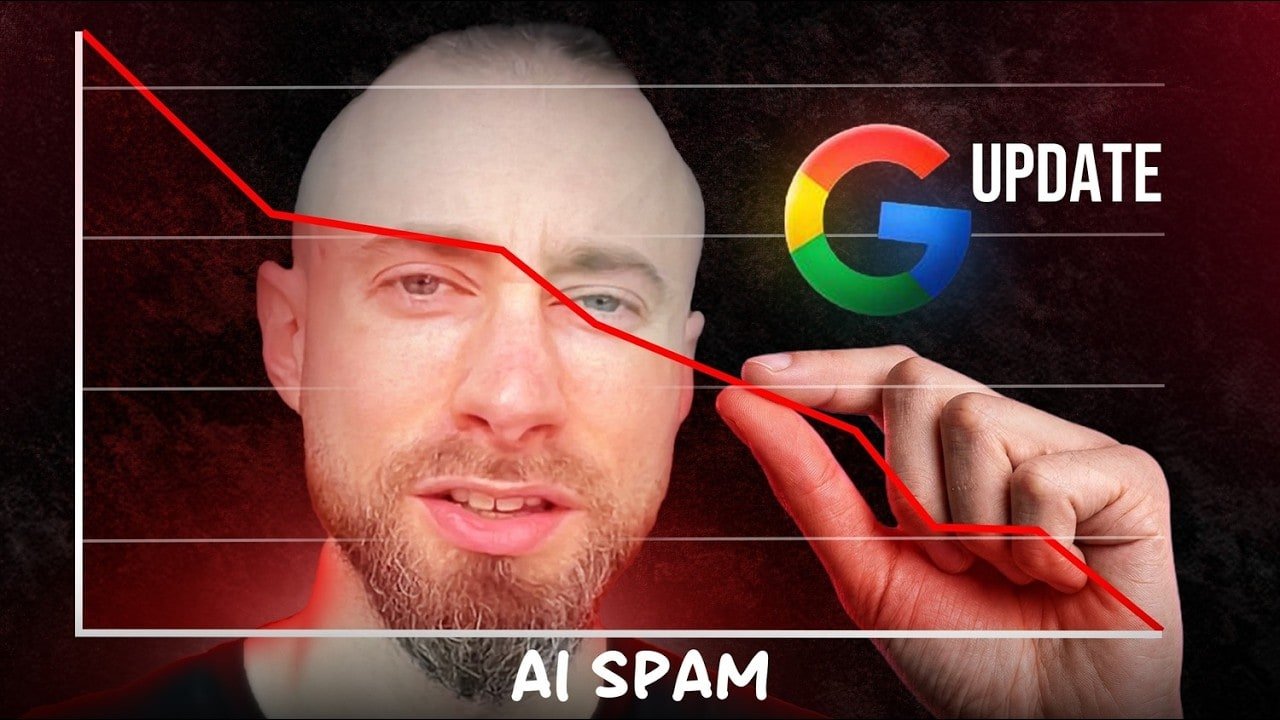
Image credit: Screenshot from "Google?s May 2026 Core Update: AI Spam Gets Smoked, Local SEO Shifts, GSC Breaks" by Edward Sturm on YouTube (https://www.youtube.com/watch?v=SmQtYzuI4p4).
The March 2026 update introduced no new spam categories. That is not a footnote. It is the whole point. SpamBrain did not change the rules. It got sharper at seeing through a specific kind of construction. The sites that got hit were not doing anything they had not been doing for months. This update did not discover violations. It acted on violations already on file. The August 2025 spam update took twenty-seven days to complete. December 2024 took seven. This one took nineteen hours. The acceleration has a technical explanation, but the underlying reality is simpler: SpamBrain had enough confidence in its read to move without a long rollout. The evidence had already been collected.
Here is what those sites have in common. Not the technique they used. The orientation they were built with. Every site this update caught was built around a gap between what it showed Google and what it gave users. Not dramatic cloaking where the bot gets one page and the human gets another. Subtler than that. Pages that indexed cleanly but answered nothing. Crawl architecture that signaled topical coverage without the content to back it. Internal linking that traced a clean path to the homepage and left the actual user nowhere to go. The violation was not a tactic. It was a direction. These sites were pointed at the crawler.
After a client got hit in the August 2025 update and brought me in afterward, the first thing I did was put the crawl data next to Search Console performance. Technically, the site was clean. No broken chains, no redirect loops, nothing that would raise a flag in a standard audit. But when I mapped crawl frequency against click-through rate page by page, the pattern showed up immediately: the most-crawled pages had the lowest CTR. Google had been enthusiastically indexing them for months. Users had been ignoring them for the same period. The gap between those two signals was the entire diagnosis.
The conventional advice is to fix the content. That is correct and incomplete. I spent six weeks on that site doing what looked like the right work: tightening entity relationships, pruning thin pages, restructuring internal links around what the site was actually about. Traffic dropped another eleven percent before it stabilized. Because once you dismantle the architecture that was built for the crawler, Google needs time to re-evaluate what the site actually is. The gap closes, but you pay for having had it. The site recovered over the following months, but not before the client had a very quiet stretch of calls.
The part nobody is saying out loud: the speed of this update ends a specific kind of calculation. When a spam update rolled out over three or four weeks, there was a window. Practitioners saw early turbulence, read community reports, made adjustments mid-rollout, sometimes softened the landing by pulling the most exposed pages before the full enforcement landed. That window is gone. Nineteen hours means the update was over before the conversation about it had properly started. What Google scored was the site you had built over the previous months. There was no mid-rollout correction available.
For anyone running content operations that sit anywhere near the existing spam policy lines, the math on that has changed permanently. Not in theory. Already.
If you are staring at a Search Console cliff dated March 24th or 25th, the audit question is not which policy category applies. It is whether your site was built for the person who lands on it or for the system that indexes it. SpamBrain had been studying that question for months before this update ran. March 24th is when it stopped asking.

Waleed Qamar holds a BSc in Computer Science from Purdue University and has spent the years since turning that technical foundation into something the curriculum never covered: figuring out why websites rank, why they fall, and why most businesses never find out until it is too late.
Pakistan-born and based between the United States and South Asia, he has managed search visibility for e-commerce stores, local service businesses, and SaaS startups across two continents. He started in SEO when guest posting still worked, survived the Penguin update, and has rebuilt client sites from scratch after algorithm hits more than once.
He has watched good businesses get sold packages that looked like progress and delivered nothing lasting. He has also seen the right approach quietly double a site’s traffic without a single press release about it.
His writing on SEO By Highsoftware99 covers Google algorithm updates, autocomplete optimization, semantic SEO structure, and the widening gap between what agencies promise and what Google actually rewards in 2026.
He knows what a traffic cliff looks like in Search Console on the morning you discover it.