


*By Waleed Qamar | SEO By Highsoftware99*
—
The formal remedies order landed on April 14th, and within an hour my phone had three messages from clients asking variations of the same question: should they start doing SEO for Bing now?
The question is understandable. Judge Mehta's ruling compels Google to share portions of its search index and ongoing user-interaction data with qualified competitors. Bing, Perplexity, and OpenAI are named in the conversation around who qualifies. The coverage read like a redistribution of power, which is what the SEO industry treats as an invitation to start selling new services.
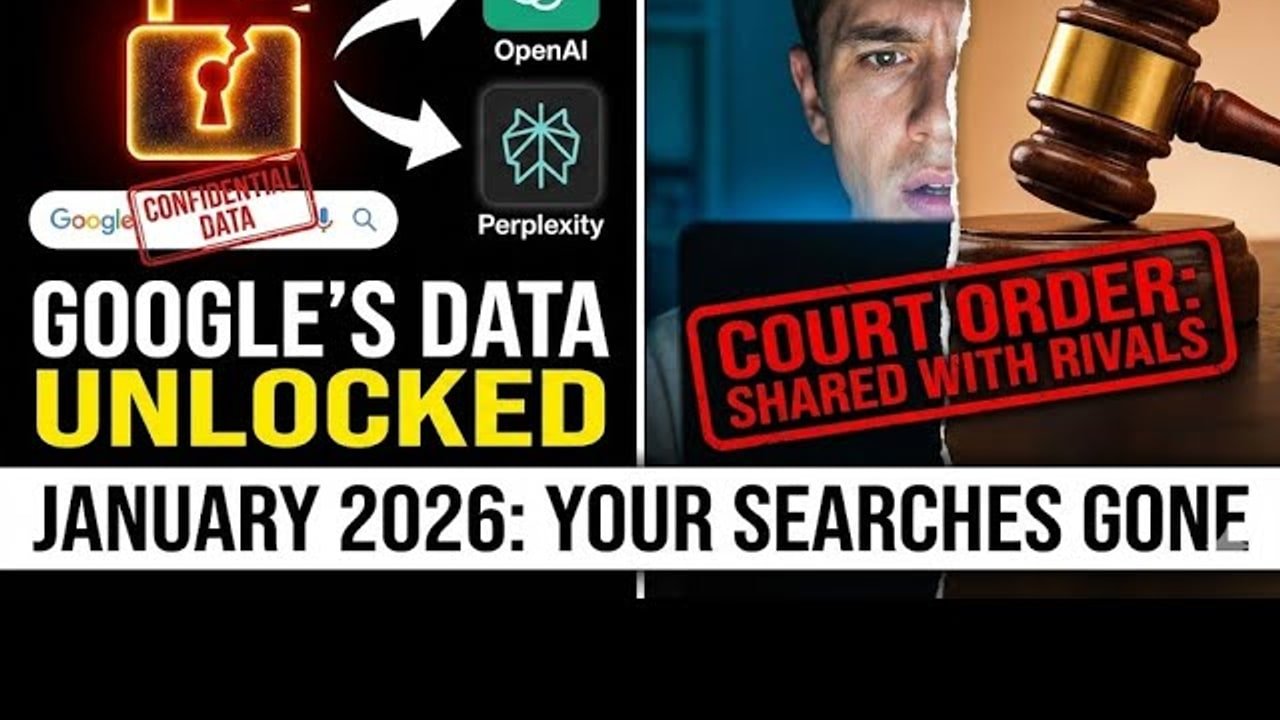
Image credit: Screenshot from "Google Must Share Your Data With AI Rivals (January 2026)" by Patent Wars on YouTube (https://www.youtube.com/watch?v=Sfg2sI3YK1A).
Here is what the order actually requires. Google must provide qualified rivals with a one-time snapshot of its search index, the catalog of crawled, scored, and ranked pages that underpins every results page you have looked at for twenty years. On top of that, it must share user-interaction data on an ongoing basis. No Chrome divestiture, no user-facing choice screen. Advertising data is excluded. What transfers is structural: crawl signals, spam scores, click-through patterns, and the behavioral record that Google has built through billions of daily queries.
The SEO commentary has been mostly focused on the index snapshot, and that is the wrong thing to focus on. The index is the catalog. It tells you what exists on the web and how Google has scored it. What makes Google hard to beat is the continuous feedback it gets from what people actually do after they search. Click on a result and go back to search: negative signal. Click and stay: positive. Adjust rankings accordingly. Repeat, at eight and a half billion queries per day, for two decades. That compounding behavioral intelligence is Google's actual advantage, and the ongoing user-interaction sharing in this ruling, not the index snapshot, is the part that starts to address it.
About eighteen months ago, working with an e-commerce client who sold outdoor equipment, I built out a serious Bing optimization track alongside the main Google work. Structured data, Shopping feed calibration, Webmaster Tools configured properly. I had watched Bing's AI integration and believed the result quality had genuinely closed the gap. Rankings came through within weeks. Traffic did not. The problem was never the quality of Bing's index. Their results were fine. The problem was that every device the client's customers owned had Google on it before those customers ever made a conscious choice. Distribution was the moat, not depth of index.
That experience is why the most underreported part of this ruling is the ban on exclusive distribution contracts, not the data sharing. Google paid Apple sixteen billion dollars in 2021 alone to be the default search engine on iOS. It had equivalent arrangements with Samsung, with carriers, with browser developers. The court has now banned those. That matters more for competitive balance than any index transfer, because those deals were what kept users on Google regardless of what competitors built. Bing and ChatGPT Search improving their index quality has never been the constraint. Getting in front of people who are not already inside Google's distribution network has.
For the clients who texted me on April 14th: no, you do not need to start optimizing for Bing today. Google still accounts for 87.5 percent of search referral traffic. All AI search combined sends 0.27 percent. The order is under appeal, implementation will take time, and even once the data sharing starts, behavioral change at this scale is measured in years. The businesses that will benefit from a more competitive search market are the ones building genuine authority now, not the ones chasing the new narrative in an agency deck.
What you do want to pay attention to over the next eighteen months is whether AI search engines start sending you measurable traffic. Not as a reason to rebuild your strategy around it, but as a real signal that behavioral change is actually happening. That number lives in your referrals report, not in a court filing.
Build for the user who arrives, finds what they need, and does not go back to search. That is the signal this entire legal fight was about, and it is the only one that will matter in whatever search environment comes after this one.

Waleed Qamar holds a BSc in Computer Science from Purdue University and has spent the years since turning that technical foundation into something the curriculum never covered: figuring out why websites rank, why they fall, and why most businesses never find out until it is too late.
Pakistan-born and based between the United States and South Asia, he has managed search visibility for e-commerce stores, local service businesses, and SaaS startups across two continents. He started in SEO when guest posting still worked, survived the Penguin update, and has rebuilt client sites from scratch after algorithm hits more than once.
He has watched good businesses get sold packages that looked like progress and delivered nothing lasting. He has also seen the right approach quietly double a site’s traffic without a single press release about it.
His writing on SEO By Highsoftware99 covers Google algorithm updates, autocomplete optimization, semantic SEO structure, and the widening gap between what agencies promise and what Google actually rewards in 2026.
He knows what a traffic cliff looks like in Search Console on the morning you discover it.
