

# The "Always-On" Google Agent That Now Browses the Web 24 Hours a Day Without You Asking, and What It Does to Your Rankings
*By Waleed Qamar | SEO By Highsoftware99*
—
The client sent me a screenshot at 7 AM. Not a message, just the screenshot. Their GSC performance report, last 28 days. Traffic looked like someone had pulled a drain. Smooth decline from day one, nothing dramatic, no single cliff, just steady erosion. No manual action. No Penguin-style hit. Every week, a little less.
I spent two hours trying to find the update that matched. There wasn't one. Not officially.
What I found instead, after digging through crawl logs and comparing timestamps against ranking shifts, was something I hadn't fully reckoned with: Google had been revisiting this site constantly, not on the usual Googlebot schedule, but through something that behaved differently. More targeted. Hitting specific pages repeatedly within the same day. Comparing content across sessions in a way that felt less like indexing and more like auditing. This wasn't a crawl. This was evaluation at velocity.

Image credit: Screenshot from "Clawdbot/OpenClaw Clearly Explained (and how to use it)" by Greg Isenberg on YouTube (https://www.youtube.com/watch?v=U8kXfk8enrY).
This is what people aren't talking about clearly enough. Google's AI infrastructure now includes systems that browse the web continuously, not just crawl it periodically. The traditional mental model stopped being accurate some time ago. Googlebot comes, Googlebot goes, you wait for the next cycle. That framework is gone, and 2026 is the year the gap between it and reality is costing businesses real money.
Here's what changes when an AI agent is running 24 hours a day against the live web: freshness signals that used to be evaluated on a weekly or monthly cycle are now being re-scored in something closer to real time. A page that ranked because it was the freshest treatment of a topic in March can lose that position by April afternoon if something better goes live. The algorithm isn't waiting for the next crawl. It's already seen it.
I've been watching this happen to clients who did everything right and still lost ground. One of them ran a local service company. Solid content, clean technical setup, no shortcuts. Stable for eighteen months. Then a competitor launched a new page, and within forty-eight hours, my client dropped three positions. Not gradually. Inside two days. The agent had already compared the pages, recalculated relevance, and updated the ranking. By the time we found out, it was done.
The part that conventional SEO advice gets wrong here is the response. The instinct is to update your content: refresh the dates, add a paragraph, push it back up the freshness queue. That worked in 2022. It works less now, because the agent isn't just reading freshness signals. It's evaluating coherence. Checking whether your page actually covers what it says it covers. Whether the entities connect the way they should. Whether your information matches what the system is already aggregating from other sources.
I had a client page that ranked well for eighteen months on a topic it barely addressed. The keyword was there, the backlinks were solid, the content was thin but it had aged. After one of these agent-driven re-evaluations, it dropped to page three in a week. Adding more content made it worse. I tried, and it went further down. What actually worked, and I would not have predicted this, was restructuring the entity relationships on the page. Not adding words. Changing how the concepts connected to each other. That's what the agent was reading. That's what it rewarded.
The business owners I talk to aren't being told this. They're being sold packages built on the old crawl model: DA scores, backlink velocity, monthly reports with green arrows that don't correspond to anything moving in Search Console. Those reports will still look fine for a while, because the metrics are measured on timescales that don't match what Google is actually doing. The traffic is already moving before the report catches up.
What I'm telling clients now is this: the game is no longer about getting found on the next crawl. It's about being continuously legible to a system that is always already watching. Entity clarity, content coherence, structural integrity. These matter more than they ever have, and the shortcuts that worked by gaming the gap between crawl cycles no longer have a gap to hide in.
If you built your SEO on timing and volume, the agent has already seen it. And it remembers what it found.
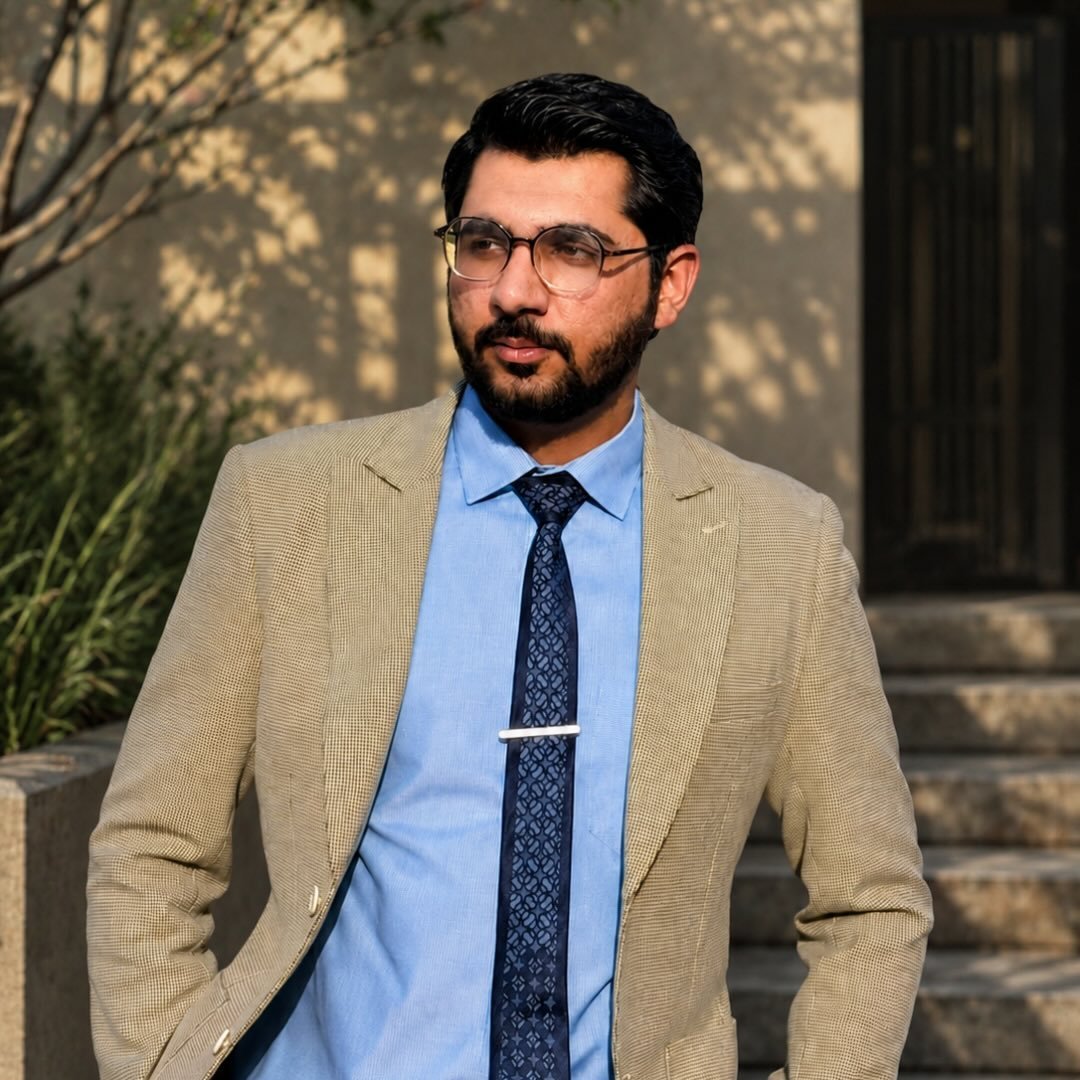
Waleed Qamar holds a BSc in Computer Science from Purdue University and has spent the years since turning that technical foundation into something the curriculum never covered: figuring out why websites rank, why they fall, and why most businesses never find out until it is too late.
Pakistan-born and based between the United States and South Asia, he has managed search visibility for e-commerce stores, local service businesses, and SaaS startups across two continents. He started in SEO when guest posting still worked, survived the Penguin update, and has rebuilt client sites from scratch after algorithm hits more than once.
He has watched good businesses get sold packages that looked like progress and delivered nothing lasting. He has also seen the right approach quietly double a site’s traffic without a single press release about it.
His writing on SEO By Highsoftware99 covers Google algorithm updates, autocomplete optimization, semantic SEO structure, and the widening gap between what agencies promise and what Google actually rewards in 2026.
He knows what a traffic cliff looks like in Search Console on the morning you discover it.