

The AI content ranking formula is Google's multi-stage content evaluation pipeline that determines whether a page ranks in traditional search results or gets cited in AI Overviews. It applies 7 core signals: semantic completeness, E-E-A-T, entity density, multimodal integration, vector embedding alignment, factual verification, and content freshness.
—
Google Search documentation covers the official details in Creating helpful, reliable, people-first content.
What Is the AI Content Ranking Formula?
The AI content ranking formula is the combination of signals Google's ranking systems use to evaluate and rank AI-assisted and human-written content. Google does not publish a single formula. Research published at ICLR 2025 by Google Research confirmed a 5-stage pipeline that governs how content is selected for AI Overviews and traditional rankings.
GA4 Traffic Drop: 9 Common Causes in 2025 and How to Diagnose Each One
The 5 stages of Google's AI content ranking pipeline are:
- Retrieval: semantic and keyword signals identify candidate sources
- Initial ranking: E-E-A-T, domain authority, and content freshness are applied
- Semantic re-ranking: contextual relevance to the specific query is evaluated
- LLM re-ranking: Google's Gemini model assesses whether sources provide sufficient context to answer the query accurately
- Data fusion: multiple sources are combined into a coherent response with inline citations
Only 5 to 15 final sources pass all 5 stages to appear in an AI Overview.
Does Google Penalise AI-Generated Content?
Google does not penalise content for being AI-generated. A Semrush analysis of 20,000 URLs ranking in the top 20 positions found that 57% of AI-generated content and 58% of human-written content appeared in the top 10. Performance is near-identical when content quality is equal.
Google penalises content that is shallow, outdated, or created to manipulate rankings, regardless of whether it was produced by AI or a human writer.
—
What Are the 7 Core Signals in the AI Content Ranking Formula?
Signal 1: What Role Does Semantic Completeness Play in AI Content Ranking?
Semantic completeness is the strongest single ranking signal in Google's AI content evaluation. Analysis of 15,847 AI Overview results across 63 industries found semantic completeness carries a correlation of r = 0.87 with AI Overview citation rates. Content scoring 8.5 out of 10 or higher on semantic completeness is 4.2 times more likely to be cited than content with lower scores.
Semantic completeness measures whether content answers a query fully without requiring the user to click to another source. Self-contained answer passages of 134 to 167 words perform at the highest selection rates for AI Overviews, according to research from AI Mode Boost (2025).
3 practices that improve semantic completeness:
- Open each section with a direct answer to the heading question in the first sentence
- Include all supporting evidence, data, and context within the same section
- Avoid answer structures that require reading other sections to make sense of the current one
Signal 2: How Does E-E-A-T Affect AI Content Rankings?
E-E-A-T (Experience, Expertise, Authoritativeness, and Trustworthiness) functions as a mandatory filter in Google's ranking pipeline. Research analysing AI Overview citation sources found that 96% of citations come from pages with strong E-E-A-T signals. Pages with weak E-E-A-T are eliminated before LLM re-ranking begins, regardless of content quality.
The 4 components of E-E-A-T and how Google evaluates each are:
| E-E-A-T Component | What Google Evaluates |
|---|---|
| Experience | First-hand knowledge demonstrated through case studies, original data, or direct subject involvement |
| Expertise | Author credentials, qualifications, and depth of subject knowledge |
| Authoritativeness | Backlinks from reputable sources, media citations, and domain topic coverage |
| Trustworthiness | Cited sources, factual accuracy, secure site, and transparent authorship |
Implement Person schema markup on author pages. Link to institutional affiliations, certifications, and published research where available.
Signal 3: How Does Entity Density Influence AI Content Rankings?
Entity density measures the number of recognised named entities within a page and their relationships to the query topic. Research from Wellows (2025) found that pages with 15 or more recognised entities per 1,000 words show a 4.8 times higher selection probability for AI Overview citations.
Entities include named people, organisations, locations, products, and concepts that Google's Knowledge Graph recognises. Examples include publishing a study citing Harvard Medical School (organisation entity), referencing a statistic from Statista (data entity), or naming a specific Google algorithm update (product entity).
Signal 4: What Is the Role of Multimodal Content in AI Content Rankings?
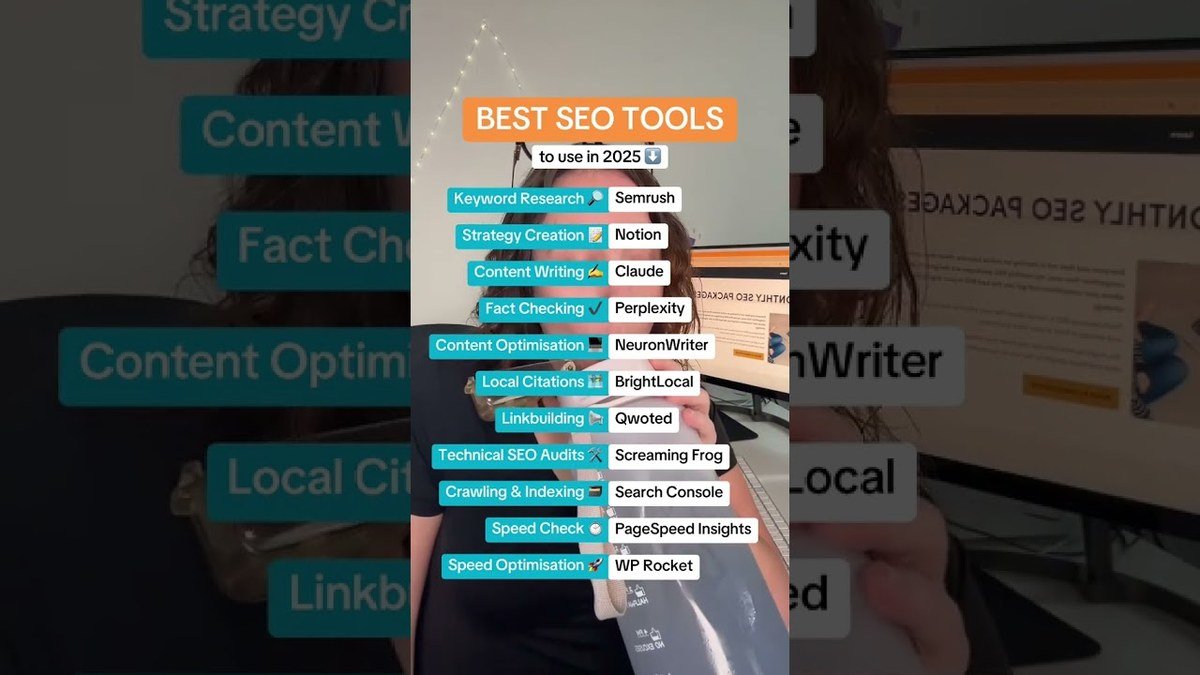
Multimodal content combines text, images, video, and structured data markup on a single page. Analysis of 15,847 AI Overview results found that pages combining all 4 content formats achieve 156% higher selection rates than text-only pages. Pages with full multimodal integration including schema markup achieve up to 317% more citations.
Multimodal ranking signals apply to both AI Overview citations and traditional organic rankings. Google's June 2025 core update confirmed that content structure and format are ranking signals alongside content quality.
Signal 5: How Does Vector Embedding Alignment Affect AI Content Rankings?
Vector embedding alignment measures how closely the semantic meaning of a page aligns with Google's AI understanding of the query. Pages with cosine similarity scores above 0.88 achieve 7.3 times higher citation rates than pages scoring below 0.75, according to Wellows (2025) research carrying a correlation of r = 0.84.
In practice, vector embedding alignment improves by writing content that covers the full semantic scope of a topic. Use semantically related terms, synonyms, and subtopics that surround the primary subject. Keyword stuffing and thin content both reduce alignment scores.
Signal 6: How Does Factual Verification Affect AI Content Rankings?
Google's AI systems cross-check content facts in real time against authoritative databases before citing a source. Pages containing recent statistics, peer-reviewed research citations, and Tier-1 source references achieve 89% higher selection probability in AI Overviews than pages with unverified claims.
Tier-1 citation sources that carry the highest trust weight include:
- Government and institutional sources such as .gov and .edu domains
- Peer-reviewed journals and published academic research
- Established industry data providers such as Statista, Nielsen, and Pew Research
- News organisations with strong editorial standards
Signal 7: How Does Content Freshness Affect AI Content Rankings?
Content freshness measures how recently a page was published or meaningfully updated. A 16-month AI content ranking experiment published by Search Engine Land (2026) found that pages with early relevance but no authority, freshness, or E-E-A-T signals lost rankings sharply after initial indexing. After the August 2025 Google spam update, pages in the top 100 rose from 3% to 20% following content authority improvements.
Freshness signals include the publication date, the date of the last substantive content update, and the recency of cited data and statistics. Pages updated within 90 days with current statistics and revised sections outperform stale pages on the same topic.
—
How Do Traditional SEO Signals Compare to AI Ranking Signals?
| Ranking Signal | Traditional SEO Weight | AI Overview Weight |
|---|---|---|
| Domain Authority | High | Declining (r = 0.18 correlation) |
| Keyword match | High | Low |
| Backlinks | High | Medium |
| Semantic completeness | Low | Critical (r = 0.87) |
| E-E-A-T | Medium | Mandatory filter |
| Entity density | Low | High (4.8x impact) |
| Multimodal content | Low | High (156% to 317% uplift) |
Research from Wellows (2025) confirmed that traditional Domain Authority correlation with AI Overview citations has dropped to r = 0.18. Additionally, 47% of AI Overview citations come from pages ranking below position 5 in traditional search, confirming that AI ranking operates on different logic than position-based organic ranking.
—
How Do You Apply the AI Content Ranking Formula to a Page?
Applying the AI content ranking formula to a page follows 6 steps:
- Open each section with a self-contained answer of 134 to 167 words that fully addresses the heading question
- Add author credentials, institutional affiliations, and Person schema markup to the page
- Cite a minimum of 3 Tier-1 sources per page with inline attribution
- Include 15 or more named entities per 1,000 words with clear relational context
- Add at least 1 image with descriptive alt text, 1 structured data block, and where relevant, an embedded video
- Update the page every 90 days with current statistics and revised sections
—
What Is the Most Important Factor in the AI Content Ranking Formula?
Semantic completeness is the most important factor, carrying the highest correlation (r = 0.87) with AI Overview citation rates across 15,847 results analysed. A page that answers its primary query fully, without requiring external references, passes the first and most critical stage of Google's 5-stage AI ranking pipeline.
E-E-A-T is the second most critical factor because it functions as an elimination filter before LLM re-ranking begins. A page with perfect semantic completeness but weak E-E-A-T signals is removed before Gemini evaluates it for citation. Apply both signals together. Content that is complete, credible, entity-rich, multimodal, and factually verified consistently outperforms content optimised for traditional keyword and link signals alone.

Waleed Qamar holds a BSc in Computer Science from Purdue University and has spent the years since turning that technical foundation into something the curriculum never covered: figuring out why websites rank, why they fall, and why most businesses never find out until it is too late.
Pakistan-born and based between the United States and South Asia, he has managed search visibility for e-commerce stores, local service businesses, and SaaS startups across two continents. He started in SEO when guest posting still worked, survived the Penguin update, and has rebuilt client sites from scratch after algorithm hits more than once.
He has watched good businesses get sold packages that looked like progress and delivered nothing lasting. He has also seen the right approach quietly double a site’s traffic without a single press release about it.
His writing on SEO By Highsoftware99 covers Google algorithm updates, autocomplete optimization, semantic SEO structure, and the widening gap between what agencies promise and what Google actually rewards in 2026.
He knows what a traffic cliff looks like in Search Console on the morning you discover it.