

*By Waleed Qamar | SEO By Highsoftware99*
—
The client sent me two screenshots side by side. Same keyword. Same city. Same time. Different results. She had searched logged in, and her colleague had searched from a different account. The top three weren't even in the same order. She wanted to know which one was "real."
Both of them were real. That is what makes this harder to explain than anything I have had to explain before.
Google's Personal Intelligence feature rolled out to nearly 200 countries in May 2026, free of charge, connecting Gmail, Google Photos, and soon Google Calendar directly into AI Mode search results. The feature had been a premium beta in the US since January. Now it is the default experience for most of the world's Google users, and it changes something that has been the foundation of SEO measurement since the day keyword rank tracking tools were invented: the idea that a search query maps to a stable result.
Two users searching the same phrase in the same city now frequently receive different results, shaped by their personal data. Not different by a ranking or two. Different sources, different citations, different content. The AI Mode result for a query about home renovation services will surface different contractors depending on which contractors have appeared in that user's Gmail history, which emails they have received, which brands have made contact with them before. Brands with Gmail presence through receipts, newsletters, or transactional correspondence are now factoring into search visibility in a way that has nothing to do with the content on their website.
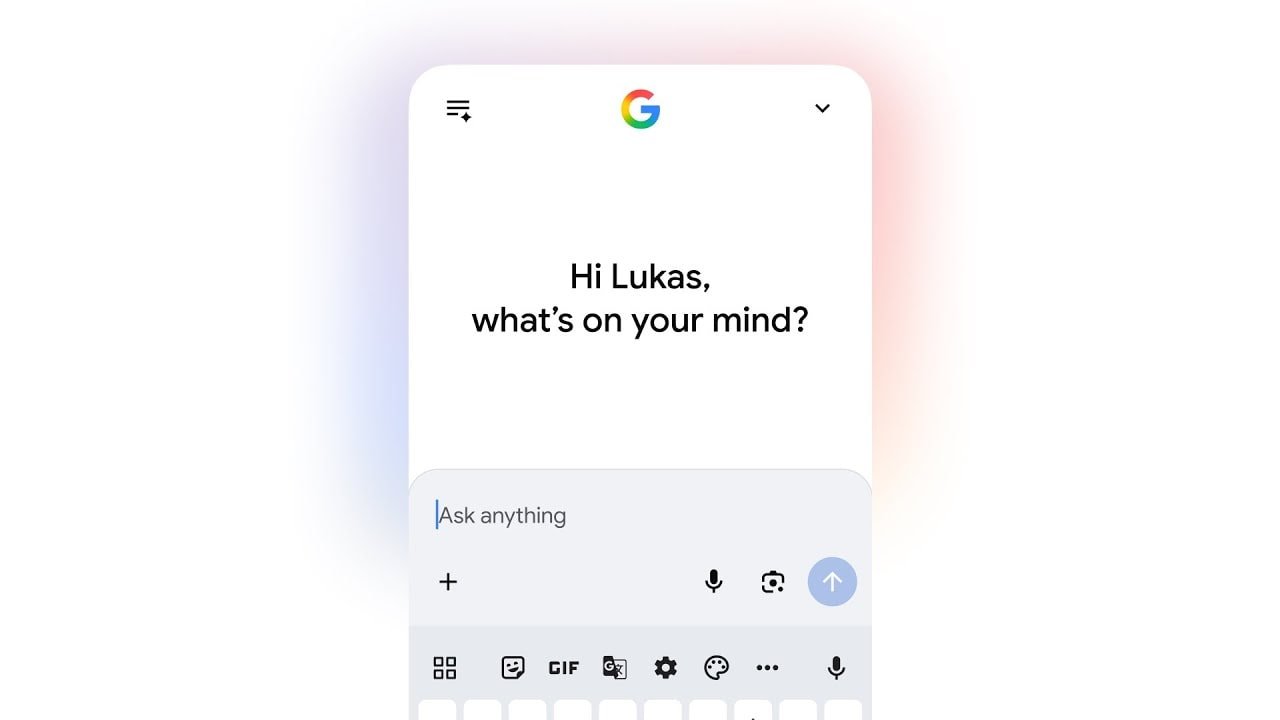
Image credit: Screenshot from "New in Search | Personal Intelligence in AI Mode" by Google on YouTube (https://www.youtube.com/watch?v=8sABhCMxU3c).
Rank tracking has always been an approximation. Personalization based on search history has existed for years. Location signals shifted results. Logged-in accounts saw something different from incognito. The SEO industry built around those variations by tracking positions from clean baseline sessions and treating the number as a useful proxy, if not a precise one.
What Personal Intelligence does is different in kind, not degree. Gmail contains a user's entire commercial history. Every order confirmation, every customer service thread, every newsletter subscription for the past decade. When that data feeds into which brands appear in search results, the baseline session no longer represents most users' actual experience. It represents a fictional user who has no email history, no brand relationships, no prior context at all. The rank tracker is reporting the experience of someone who does not exist.
Here is where I found the conventional wisdom failing in practice. The standard response when a client's AI Mode visibility drops is to audit their content for entity coverage, check structured data, review which sources are being cited. I ran through that checklist for a client in a home services category. Clean entities, solid structured data, cited in AI Overviews for related queries. They were disappearing from the results for the terms that actually drove their business, and the audit found nothing wrong.
What I found instead, after testing from multiple logged-in accounts with different Gmail histories, was that a competitor had been running an email list for three years. That competitor had inbox presence for every potential customer who had ever opened one of their newsletters. The content on their site was not better. Their backlinks were not stronger. But they showed up in personalized results for the users who mattered, and my client did not. The content audit missed it because content was not the variable.
Nobody sold email list management as an SEO strategy in January. It is one now.
The deeper issue is that keyword research, rank tracking, and competitor analysis were all built on the assumption that the same query produces a comparable result for different users. That assumption no longer holds for AI Mode in markets where Personal Intelligence is active. At 200 countries and 98 languages, that covers most of the world's Google search volume.
There is no disavow file for someone else's email newsletter. There is no technical fix for a competitor who has been inside your potential customers' inboxes since 2023. What this changes is which channels count as search surface area now, and the answer includes channels that SEO practitioners have historically not owned or measured.
If you are planning SEO in 2026 on the basis that your ranking data reflects what your customers see, you are optimizing for a search result that may not correspond to a single real user in your market.

Waleed Qamar holds a BSc in Computer Science from Purdue University and has spent the years since turning that technical foundation into something the curriculum never covered: figuring out why websites rank, why they fall, and why most businesses never find out until it is too late.
Pakistan-born and based between the United States and South Asia, he has managed search visibility for e-commerce stores, local service businesses, and SaaS startups across two continents. He started in SEO when guest posting still worked, survived the Penguin update, and has rebuilt client sites from scratch after algorithm hits more than once.
He has watched good businesses get sold packages that looked like progress and delivered nothing lasting. He has also seen the right approach quietly double a site’s traffic without a single press release about it.
His writing on SEO By Highsoftware99 covers Google algorithm updates, autocomplete optimization, semantic SEO structure, and the widening gap between what agencies promise and what Google actually rewards in 2026.
He knows what a traffic cliff looks like in Search Console on the morning you discover it.