

By Waleed Qamar | SEO By Highsoftware99
Three clients, different industries, different content strategies, different link profiles. Same Search Console shape: a slow erosion from August, a steeper drop through November, then a cliff edge in January that none of them had done anything specific to deserve.
When the aggregate data started surfacing this spring, I was not surprised. The 33 percent figure for global publisher traffic loss was already visible in individual account data for anyone who had been watching closely enough. In the United States, it landed at 38 percent, and the analysts who cover search called it a "managed decline." That phrase is doing a lot of diplomatic work. What it means, stripped of the framing, is that Google is systematically redirecting the attention it used to pass to publishers into answers it keeps for itself.
The conventional advice for publishers facing this has been consistent: produce higher-quality content, build stronger topical authority, get better backlinks, optimize for E-E-A-T signals. All of that advice is technically correct and almost completely useless for the problem that is actually happening. One of those three clients had done everything right. Genuine editorial standards, real authors with real credentials, original reporting on a niche topic with limited competition. Their content quality was not the issue. Quality did not protect them because quality is not what this is about.
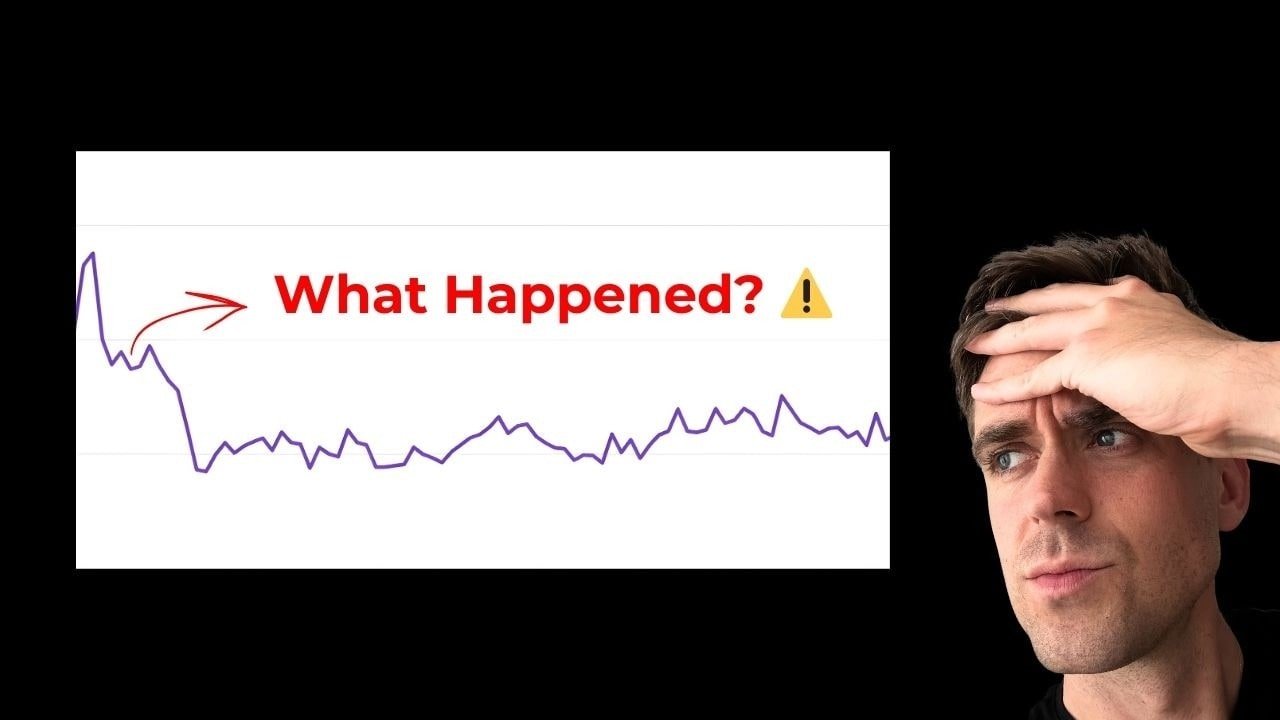
Image credit: Screenshot from "Why Your Google Traffic Dropped in 2026 (And How to Fix It)" by Keyword_com Rank Tracker on YouTube (https://www.youtube.com/watch?v=v1LhpXZdOvQ).
AI Overviews are not ranking bad content above good content. They are answering the query before the user clicks anything. The publisher's content may have contributed to training the answer, or informed the sources that informed the answer, or been cited in a way that generates zero sessions. The traffic that used to flow from that query, the kind that paid editorial salaries, now stops at the SERP. Google calls it a better user experience. For every ad-supported or subscription-reliant publisher, it is a structural revenue problem dressed up as a feature.
I want to be precise about what I find genuinely alarming here, because it is not the technology itself. I have recommended AI Overviews optimizations to clients and some of them have seen citation increases that partially offset session losses. The technology works. The problem is the distribution of value. Google captures the engagement. The publisher absorbs the cost of producing the content that made the engagement possible. That arrangement was always implicit in how search worked, but it was tolerable when the publisher got traffic in return. Remove the traffic and the model collapses on one side only.
The "managed decline" language bothers me specifically because it implies a tempo that businesses can plan around. Managed suggests gradual, predictable, something you can adapt to. What I saw in those three Search Consoles was not managed from the publisher's perspective. There was no warning, no transition period, no guidance from Google about what content strategy survives this. There was a number that kept going down, and an algorithm that had decided the query was better served without the click.
Here is where the conventional SEO wisdom broke most visibly. The advice I would normally give a publisher with declining traffic is to audit their top-performing content, identify where they are losing impressions, strengthen internal linking to consolidate authority, and target query types where AI answers are less likely to appear. That last one, targeting queries where AI Overviews do not trigger, is the correct tactical call right now. Longer, more specific queries. Queries with local intent. Queries that require sourced data that AI systems cannot reliably generate without a citable current document. The problem is that this audience is smaller, the CPMs are lower, and scaling it does not replace what was lost. It is a survival strategy, not a recovery.
One of those clients has not responded to messages in two months. I understand why. There is not a version of this conversation that ends with good news, and I have stopped pretending otherwise. The 38 percent number is not a temporary dip from a volatile update cycle. It reflects a deliberate architectural choice about where search sessions should end. Publishers built their businesses on the assumption that Google needed them. Google spent a decade proving, quietly and then all at once, that it does not.
Before you restructure your entire content operation around chasing AI citation visibility, check what percentage of your converting traffic, the sessions that actually turn into revenue, came from informational queries in the first place. For most publisher businesses I have seen, the answer is lower than the overall traffic share, and that changes the math on how much of this loss actually matters to survival versus how much of it is vanity metric grief.

Waleed Qamar holds a BSc in Computer Science from Purdue University and has spent the years since turning that technical foundation into something the curriculum never covered: figuring out why websites rank, why they fall, and why most businesses never find out until it is too late.
Pakistan-born and based between the United States and South Asia, he has managed search visibility for e-commerce stores, local service businesses, and SaaS startups across two continents. He started in SEO when guest posting still worked, survived the Penguin update, and has rebuilt client sites from scratch after algorithm hits more than once.
He has watched good businesses get sold packages that looked like progress and delivered nothing lasting. He has also seen the right approach quietly double a site’s traffic without a single press release about it.
His writing on SEO By Highsoftware99 covers Google algorithm updates, autocomplete optimization, semantic SEO structure, and the widening gap between what agencies promise and what Google actually rewards in 2026.
He knows what a traffic cliff looks like in Search Console on the morning you discover it.