

By Waleed Qamar | SEO By Highsoftware99
The client's entire organic traffic report was 94 percent Google. It had been for three years. I had flagged algorithm dependency in my audit recommendations. I had never once flagged platform dependency as a separate category of risk. Those are not the same thing, and the ruling that landed this spring made that distinction impossible to ignore any longer.
Judge Mehta's decision to cap all of Google's default search agreements at one year arrived with less industry panic than it deserved. Dismantling the multi-year contracts with Apple, Samsung, and Mozilla that locked Google into the default position on most devices sold in the United States is the most structurally significant antitrust outcome affecting search since the browser wars. The practitioner conversation, predictably, drifted almost immediately toward whether Apple would actually switch and whether Bing could absorb the query volume. Both questions miss the point. The ruling matters not primarily because of what happens in the next contract cycle, but because of what it confirms about how Google's dominance was constructed in the first place, and what that construction cost the rest of the ecosystem.
Google did not win on merit alone. That is not a controversial statement anymore; it is what the court found. The default agreements were not a reward for building the best search engine. They were the mechanism that made building the best search engine a viable long-term investment. Guaranteed distribution meant guaranteed query volume, which meant better training data, which meant better results, which funded the next infrastructure cycle. The feedback loop was real, and the long-term contracts were the entry point. One-year caps break the entry point. They do not, on their own, break the loop that already exists.
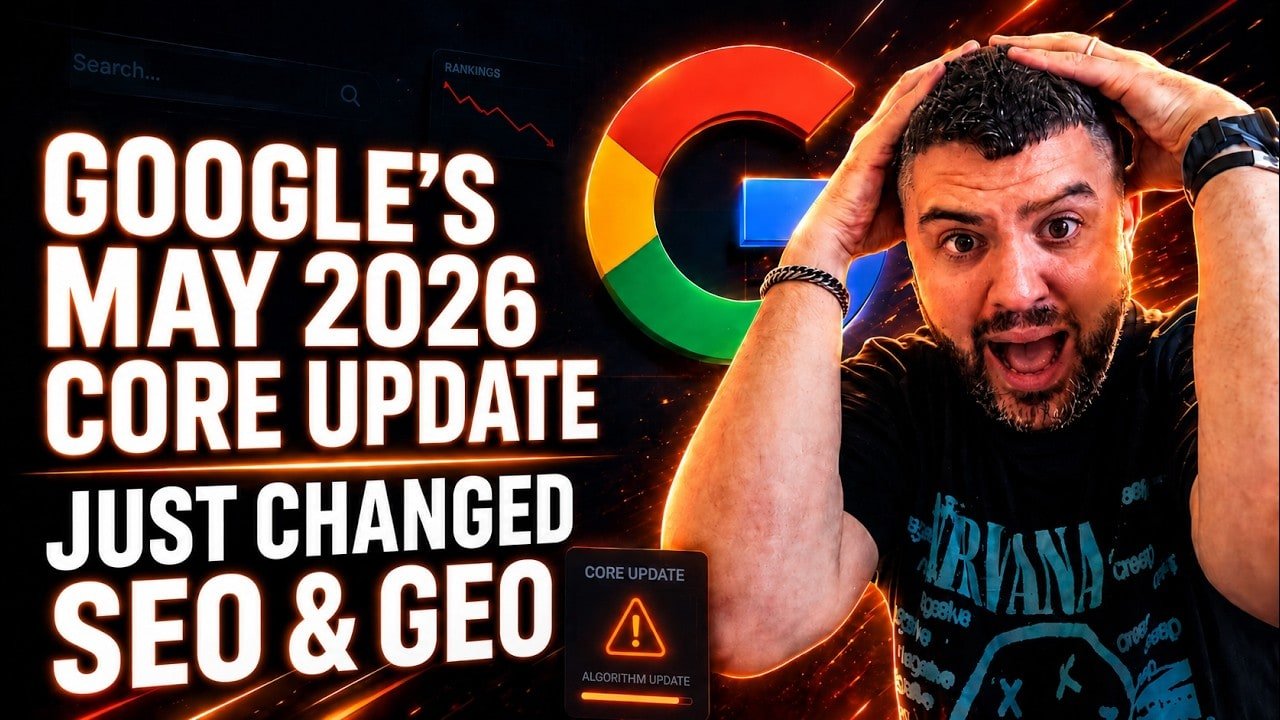
Image credit: Screenshot from "Google’s May 2026 Core Update Just Changed SEO & GEO" by Total Authority on YouTube (https://www.youtube.com/watch?v=JYdLaSv6-SQ).
Here is where the standard SEO response to this moment is going to be wrong. The received wisdom is that unless Apple actually switches defaults, nothing changes for practitioners. That reads the ruling too narrowly. What changes immediately is the negotiating position of every device manufacturer and browser vendor in the next contract cycle. Apple now has genuine annual leverage it did not have before. Mozilla has leverage. Samsung has leverage. The outcomes of those negotiations will not be announced in a press release. They will appear, gradually, in referral traffic data for sites that are watching carefully.
I had clients telling me for years that diversifying away from Google felt academic because Google was everything. They were right in a narrow sense. Building for an engine with four percent of your traffic was not a reasonable priority. The ruling does not change that arithmetic overnight. But it changes the structural conditions that produced that arithmetic, and those conditions have been stable for so long that the industry has stopped treating them as conditions and started treating them as physics.
The moment that should have been a warning came about two years ago. I was rebuilding organic visibility for a client recovering from a spam update and needed to diversify referral sources while their Google rankings stabilized. Email, social, direct: standard recovery playbook. What actually produced meaningful traffic during the rebuild was not the diversification work. It was a placement on an aggregator that happened to rank well on both Google and a vertical search engine the client had never tracked. The traffic from that vertical source converted better than the equivalent Google sessions. Nobody on the team had been measuring it because nobody had been thinking about it. That is exactly the shape of the opportunity the ruling is now forcing into view.
The SEO industry built its entire professional practice on the assumption that Google's dominance was permanent. Not as a belief anyone articulated out loud, but as the implicit foundation of every ranking framework, every link valuation model, every content strategy conversation. Diversify your traffic sources, yes. Diversify which search engine you were actually optimizing for, essentially never. The default deal structure made that bet look safe. It was safe, until a federal judge decided it was also illegal.
None of this resolves fast. One-year contract caps do not produce a different default search engine on iPhones by Q3. The transition, if there is one, will be slow enough that most practitioners will continue exactly what they are doing until referral data forces a conversation they were not prepared for.
Pull your non-Google organic referral traffic for the past eighteen months right now, not to act on it today, but to establish a written baseline before the first post-ruling contract negotiations complete. The number is probably embarrassingly small. You need to know exactly how small, because in eighteen months that number is the only honest starting point for understanding whether any of this actually moved anything, and you will want to have recorded it before it starts to change.
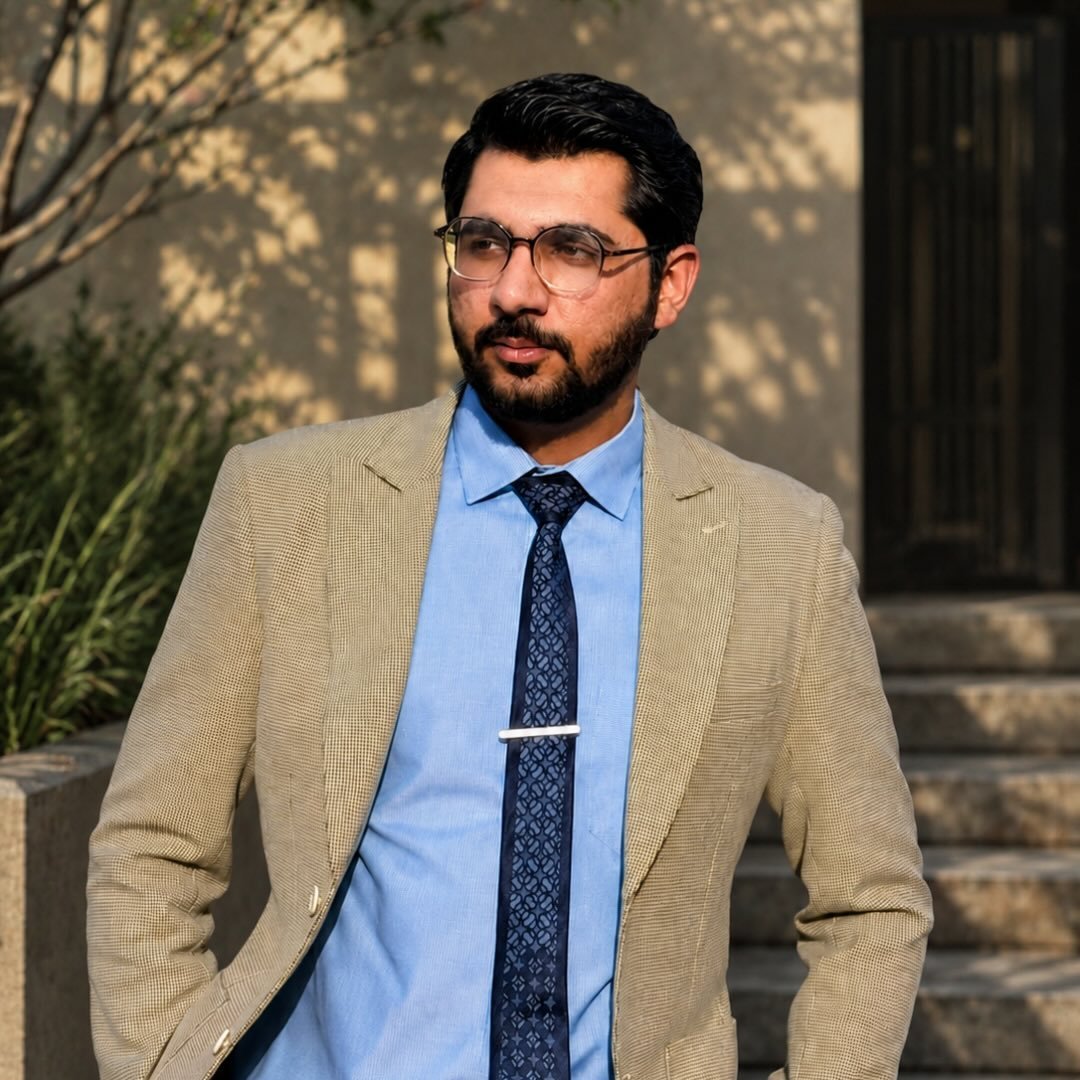
Waleed Qamar holds a BSc in Computer Science from Purdue University and has spent the years since turning that technical foundation into something the curriculum never covered: figuring out why websites rank, why they fall, and why most businesses never find out until it is too late.
Pakistan-born and based between the United States and South Asia, he has managed search visibility for e-commerce stores, local service businesses, and SaaS startups across two continents. He started in SEO when guest posting still worked, survived the Penguin update, and has rebuilt client sites from scratch after algorithm hits more than once.
He has watched good businesses get sold packages that looked like progress and delivered nothing lasting. He has also seen the right approach quietly double a site’s traffic without a single press release about it.
His writing on SEO By Highsoftware99 covers Google algorithm updates, autocomplete optimization, semantic SEO structure, and the widening gap between what agencies promise and what Google actually rewards in 2026.
He knows what a traffic cliff looks like in Search Console on the morning you discover it.