

The message came through on a Tuesday morning. A plumber outside Houston, eight years in business, three people on payroll. He had built his lead generation entirely through Google search. His organic traffic had dropped 67 percent in four days. He wanted to know what he should do.
I did not have a good answer for him. Not because I did not understand the update. Because the honest answer was not the kind anyone wants to give to a business owner who has payroll due at the end of the month.
The May 2026 core update has been described, in most SEO community coverage, as a continuation of Google's push toward authoritative, experience-backed content. The analysis has been thorough and technically sound. What it has not covered is the specific shape of the damage for the businesses that got hit hardest and have the least capacity to recover. Those businesses are not the mid-size publishers or the established e-commerce operations. They are the contractors, the local service providers, the single-location retailers who built their entire customer acquisition pipeline on organic search because it was the one marketing channel that worked for them at a cost they could sustain.
What the May update hit, specifically, was a category of site that Google's own guidance helped create. Over the past three years, small businesses were told to invest in their Google Business Profile, to build out their local service pages with genuine expertise signals, to create content that answered the questions their customers were actually asking. Many of them did exactly this. The plumber outside Houston had service pages for every neighborhood he covered. He had FAQ content written from genuine job experience. He had schema markup on every page. His Google Business Profile had 140 reviews averaging 4.8 stars.
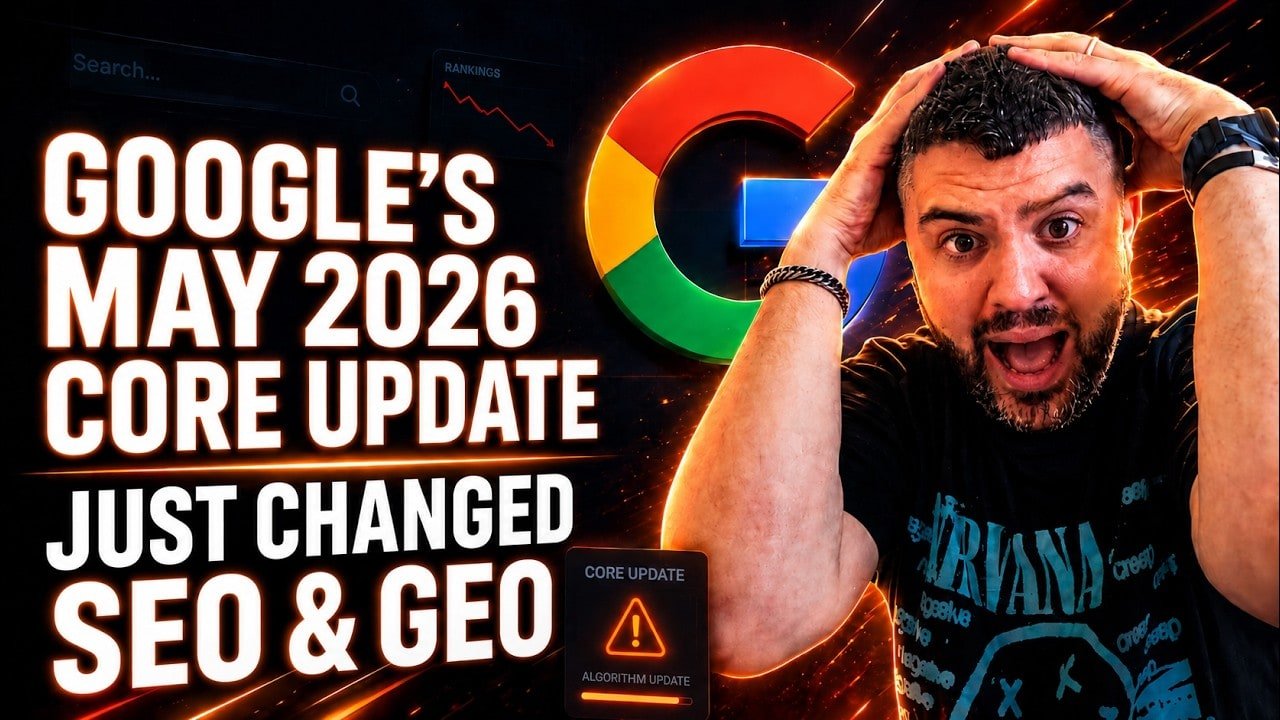
Image credit: Screenshot from "Google’s May 2026 Core Update Just Changed SEO & GEO" by Total Authority on YouTube (https://www.youtube.com/watch?v=JYdLaSv6-SQ).
None of it held.
The sites that survived this update at the local service level were mostly the ones with wider geographic footprints, stronger domain age, or existing brand search volume that insulated their rankings when the algorithm shifted. The small single-market operators had none of those buffers. They had followed the advice correctly and gotten hit anyway.
Here is where the failure is not Google's alone. The SEO industry response to the May update has been predictably structured around what the industry knows how to sell. Recovery audits. Technical assessments. Content gap analyses. Backlink profile reviews. These are real services and some of them will eventually matter. But the business owner who lost 60 percent of their organic leads last week does not have a six-month recovery runway. They have a cash flow problem. And the industry talking to them right now is largely the same industry that sold them the original package and is now positioning itself to sell them another one.
I have had this conversation with a client exactly once before and gotten it wrong. In 2024, a small e-commerce operation got hit by a spam update. Nothing I would have flagged as a serious risk. I focused on technical recovery: disavow work, crawl structure cleanup, tighter internal linking. Three months later the traffic had not come back. What worked in the end was repositioning their product content around use-case specificity, which had nothing to do with what the initial audit identified. The thing that fixed it was not the thing I had been trained to look for first.
The May update has the same profile. The sites I have reviewed that got hit are not technically broken. They are not spam. They are not over-optimized in the ways that crawl reports surface. What they are missing is something the algorithm has started weighting more heavily: a demonstrable connection between the site's claimed expertise and independent signals of that expertise existing outside the site itself. Citations, mentions, structured references from other entities that confirm the business is what it says it is. That is a different problem from technical SEO, it takes longer to fix than a recovery audit, and nobody is being honest with small business owners about what the actual timeline looks like.
The plumber in Houston deserves an honest answer more than he deserves a roadmap. The honest answer is that recovery from this specific update is an authority problem, not a content problem, and authority is built in months, not weeks, by people who are willing to say that out loud before they take your money.
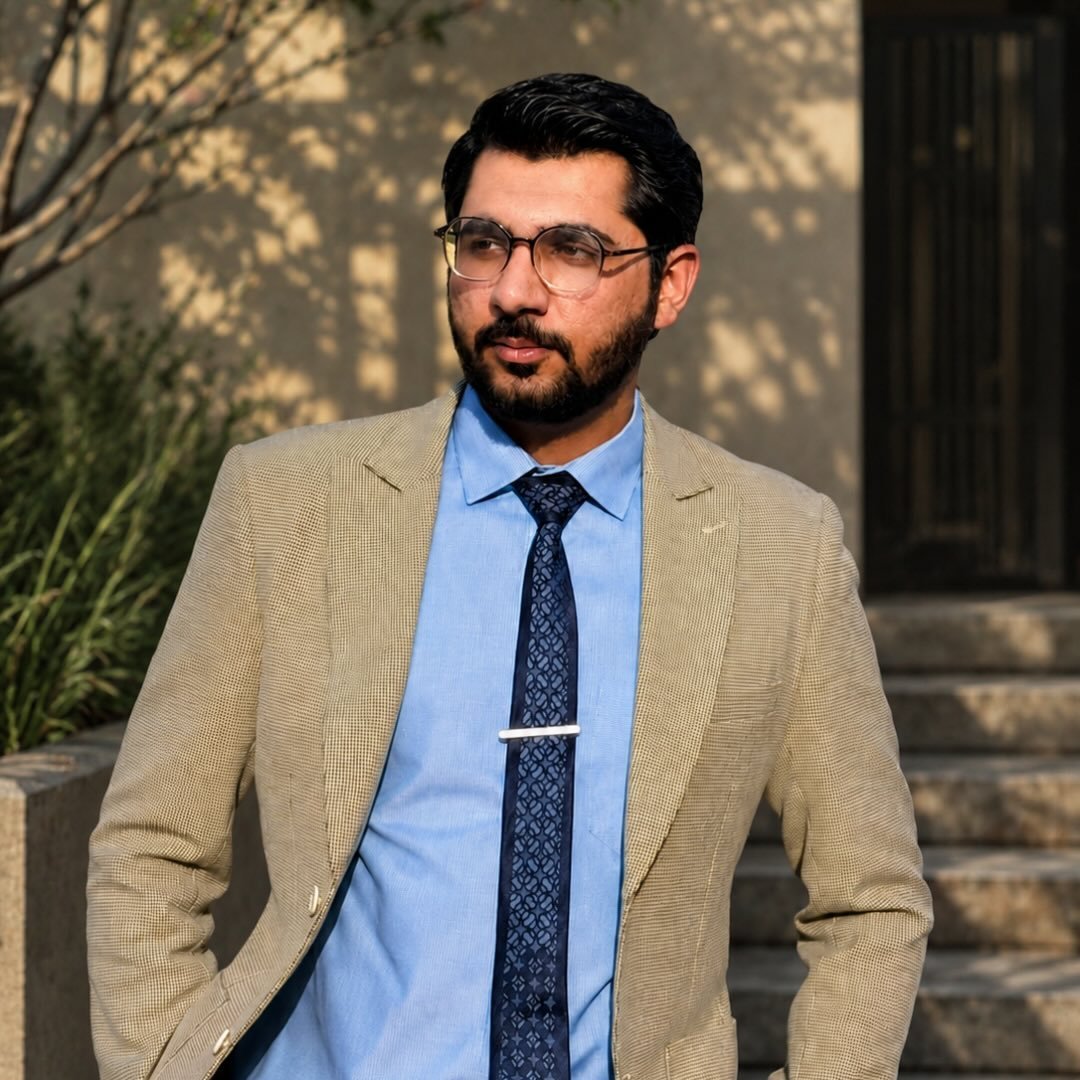
Waleed Qamar holds a BSc in Computer Science from Purdue University and has spent the years since turning that technical foundation into something the curriculum never covered: figuring out why websites rank, why they fall, and why most businesses never find out until it is too late.
Pakistan-born and based between the United States and South Asia, he has managed search visibility for e-commerce stores, local service businesses, and SaaS startups across two continents. He started in SEO when guest posting still worked, survived the Penguin update, and has rebuilt client sites from scratch after algorithm hits more than once.
He has watched good businesses get sold packages that looked like progress and delivered nothing lasting. He has also seen the right approach quietly double a site’s traffic without a single press release about it.
His writing on SEO By Highsoftware99 covers Google algorithm updates, autocomplete optimization, semantic SEO structure, and the widening gap between what agencies promise and what Google actually rewards in 2026.
He knows what a traffic cliff looks like in Search Console on the morning you discover it.